WASHINGTON, D.C. – Two NCAS-M scholars presented their research at the 2026 American Meteorological Society (AMS) Madison Summit, held August 3–7 in Madison, Wisconsin.

The summit brought together researchers, students, forecasters, and other professionals from across the weather, water, and climate community for several concurrent conferences covering topics including mountain meteorology, severe local storms, numerical weather prediction, cloud physics, atmospheric radiation, and artificial intelligence applications in the atmospheric sciences.
Dr. Oscar Chimborazo Shares Research on Artificial Intelligence
NCAS-M Assistant Research Scientist Dr. Oscar Chimborazo presented his research on artificial intelligence during the Machine Learning/AI Advances in Mountain Meteorology session, held jointly with the AMS Committee on Artificial Intelligence Applications to Environmental Science as part of the 22nd Conference on Mountain Meteorology.
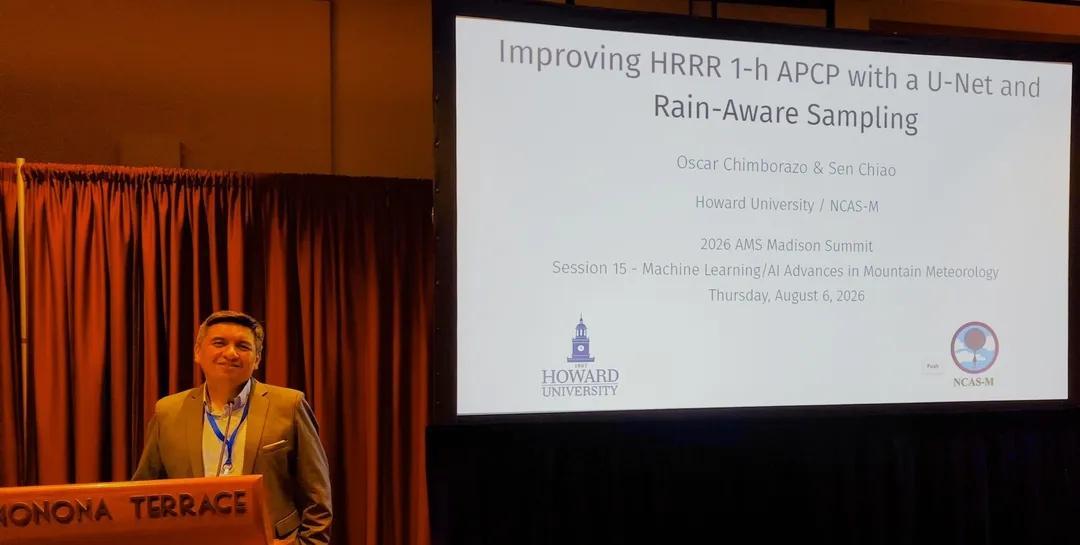
“I enjoyed my time at the AMS conference, where I shared my work on artificial intelligence and attended many great presentations, especially during the 22nd Conference on Mountain Meteorology.”
Beyond presenting his research, Oscar used the meeting as an opportunity to make new professional connections and reconnect with colleagues from the University at Albany, where he earned his Ph.D.
One of the highlights of the conference for Oscar was the Joint Symposium Honoring the Legacy of Roy Rasmussen, which brought together participants from the mountain meteorology, cloud physics, and planned and inadvertent weather modification communities.
“It was inspiring. I was touched by the immense work that a dedicated scientist can do.”
Master’s Student Josue Chamberlain Presents His Research On Low-Bouyant Supercells
NCAS-M Scholar and master’s student Josue Chamberlain also presented his research on Supercells.
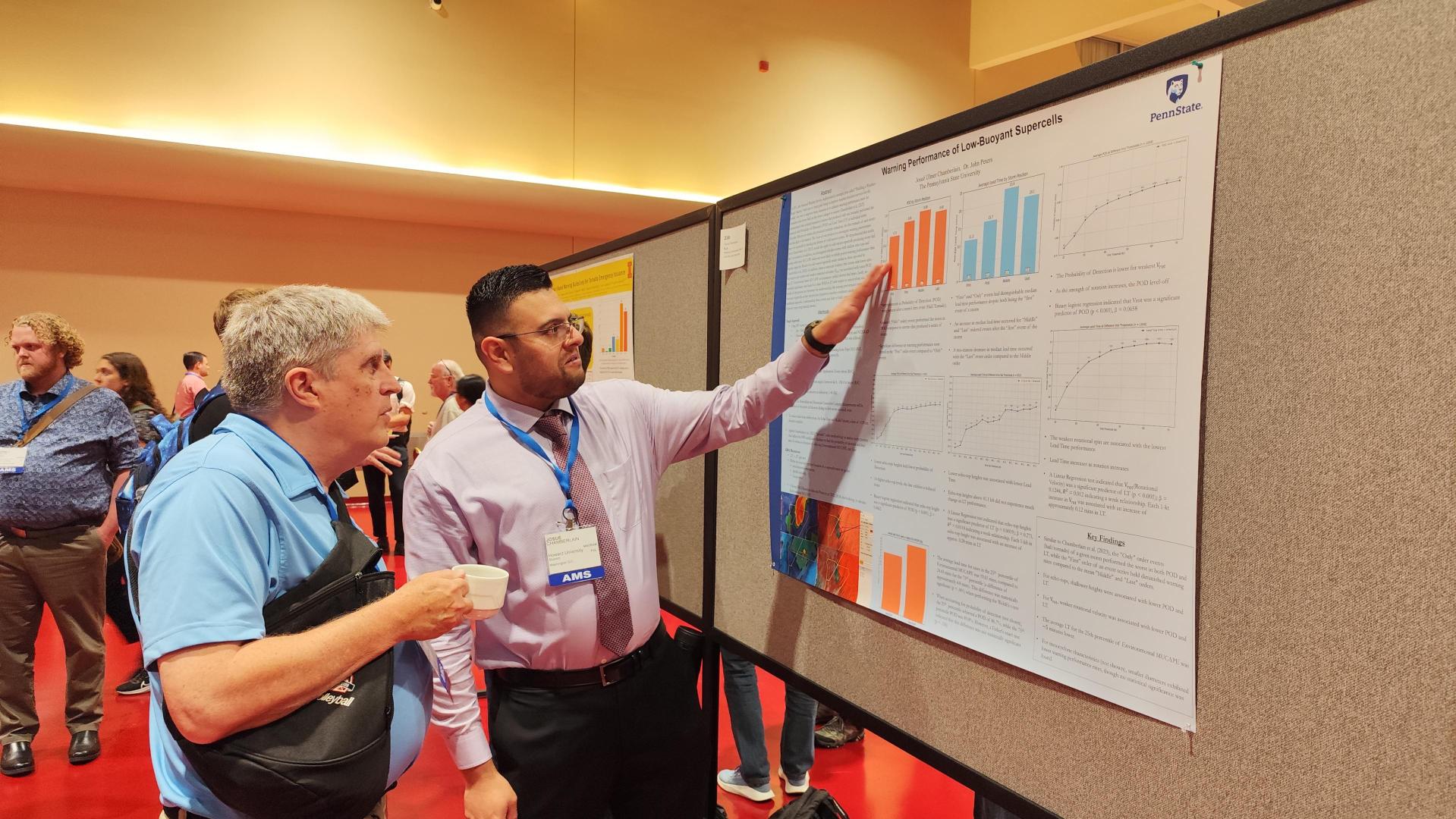
Participation in scientific meetings such as the AMS Madison Summit gives NCAS-M scholars opportunities to share their research with the broader atmospheric science community, learn about emerging areas of research, and develop professional connections across the field.