WASHINGTON, D.C. – February 13, 2026 – NCAS-M maintained a strong presence at the American Meteorological Society (AMS) 2026 Annual Meeting, with 50 scholars presenting cutting-edge research across diverse fields of atmospheric science. This continued robust representation, following growth from 22 presenters in 2023 to 66 in 2024, demonstrates the program’s sustained momentum and the deep integration of NCAS-M scholars in the atmospheric science community.
“It is a privilege to be part of this group and be part of this remarkable feat,” said Michael Benneh, a PhD student at Howard University who presented on aerosol data assimilation research. “NCAS-M has given us the opportunity to pursue and contribute to NOAA research, encouraging us to share our work and to master it, making us stand out.”
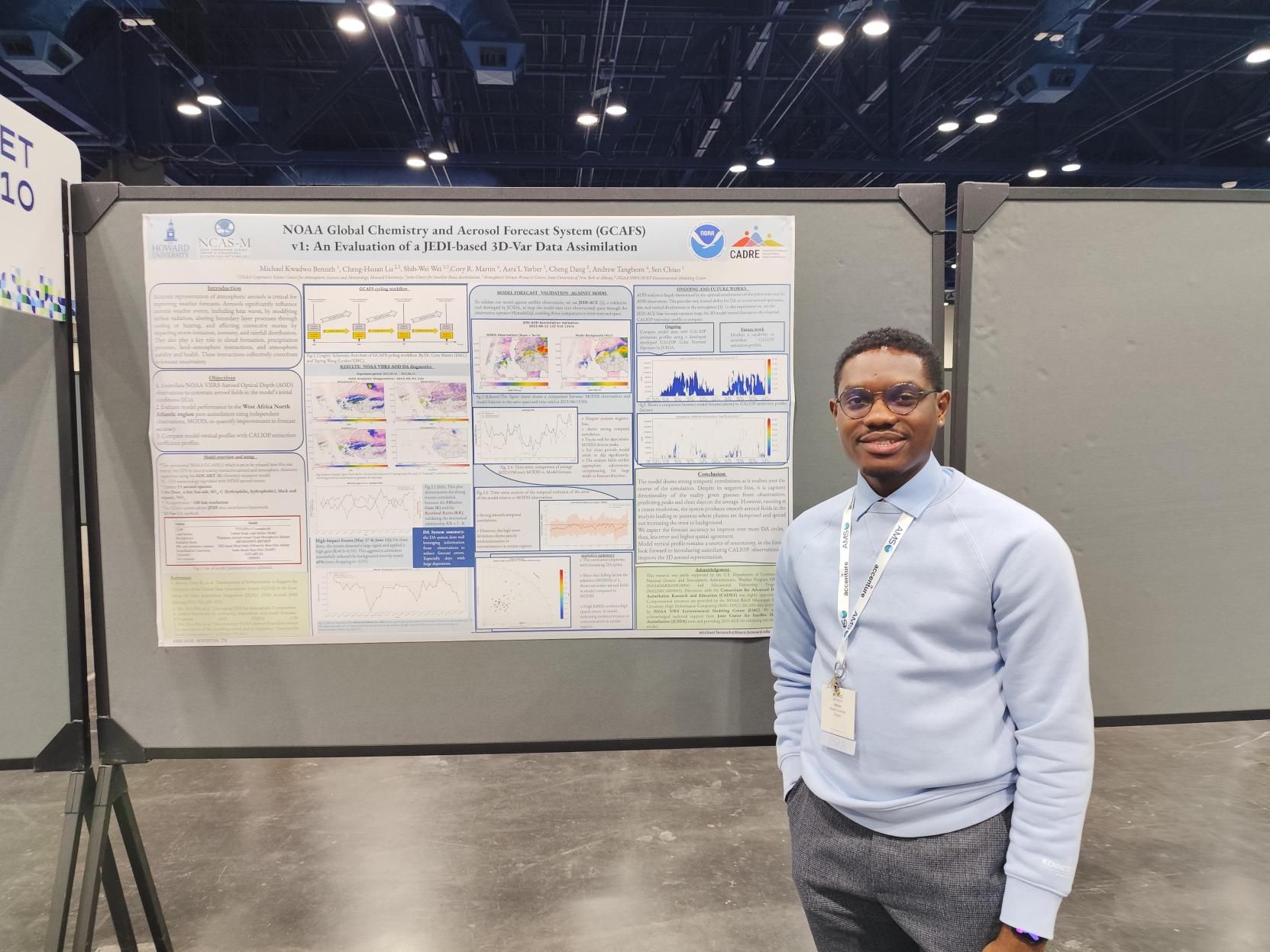
Benneh presenting at the 2026 AMS Annual Meeting.
Fifty NCAS-M presenters showcased research spanning synoptic meteorology, mesoscale dynamics, boundary layer physics, numerical weather prediction, air quality modeling, and climate risk communication. Their work reflects both the breadth of NCAS-M’s research portfolio and the program’s commitment to addressing pressing scientific challenges facing communities nationwide.
ADVANCING SCIENCE, BUILDING COMMUNITY
Among the presentations, Rodolfo Hernández, Assistant Research Scientist at Howard University, co-presented research on the Wildland-Urban Interface (WUI) and vulnerability in Texas. “It’s a massive priority right now because these WUI zones are becoming major wildfire hotspots,” Hernández explained. “When you mix that geographical risk with things like lack of preparedness and limited access to information, it becomes an urgent problem that wildfire management needs to tackle immediately.”
Hernández also participated in a panel on “Advancements of Risk Communication in Spanish-Speaking Communities,” which sparked meaningful dialogue among attendees. “After my panel, a group of colleagues and students stayed behind, and we all had this shared ‘Wow’ moment,” he recalled. “Seeing dedicated research on how we reach Hispanic and Latino communities across the U.S. was a real standout moment for me.”
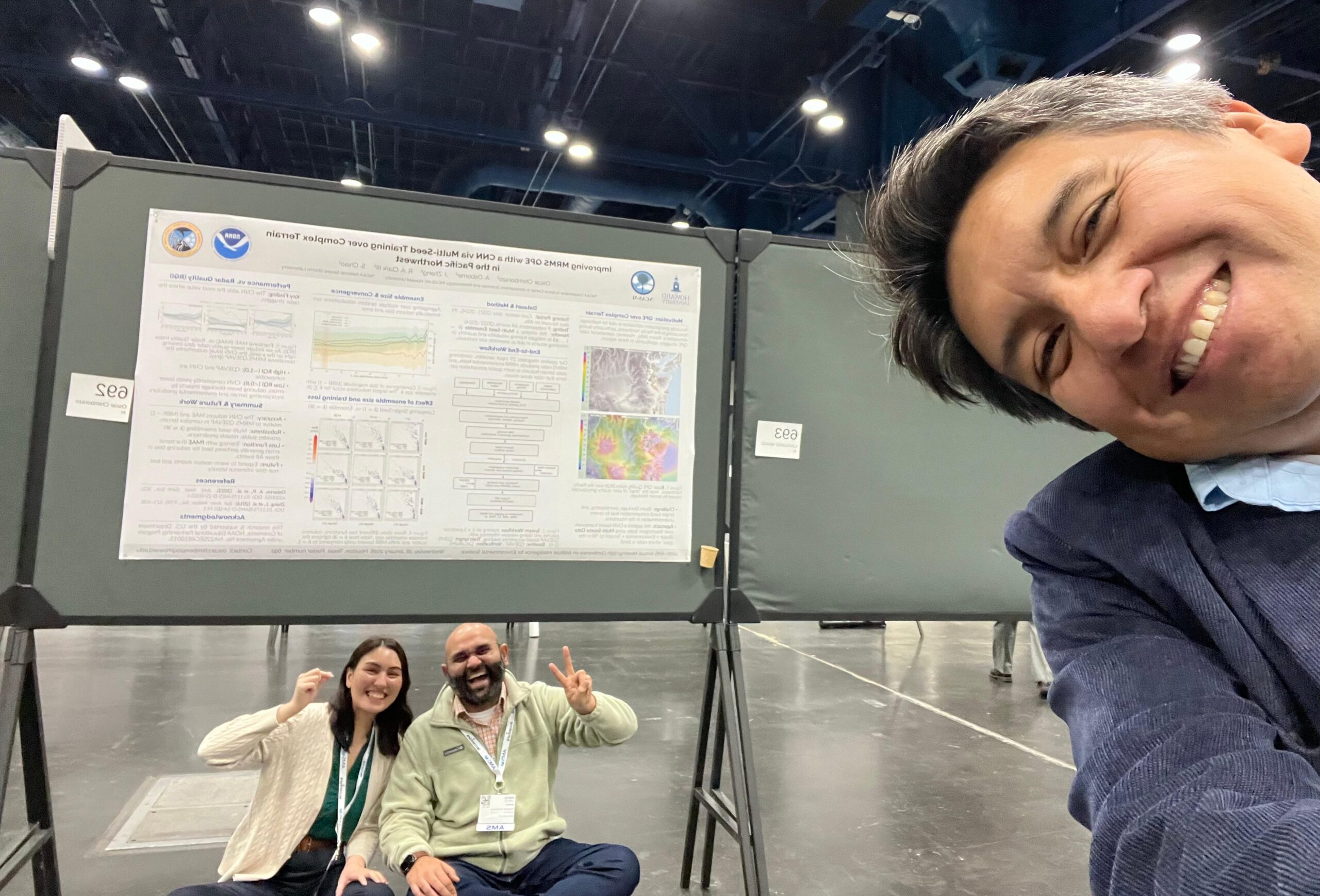
Oscar Chimborazo, Assistant Research Scientist at Howard University, presented a poster on using Convolutional Neural Networks to improve quantitative precipitation estimation from the Multi-Radar Multi-Sensor system. “The highlight was presenting my poster and sharing my research at the conference,” Chimborazo said. “It was valuable to see the rapid growth of AI-enabled techniques—not only for radar-based precipitation estimation, but also across many related topics.”
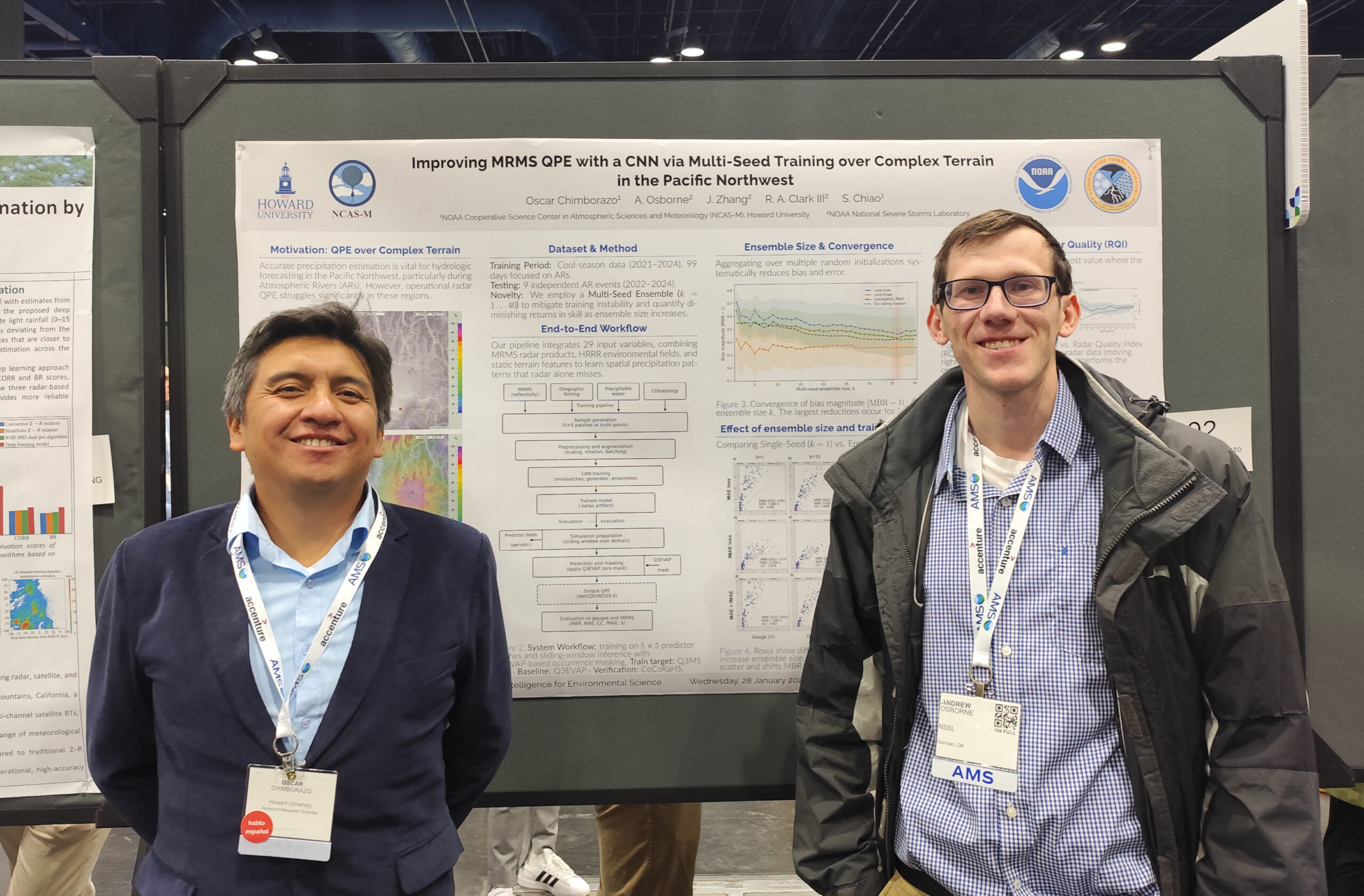
Chimborazo (left) presenting at the 2026 AMS Annual Meeting.
Myah Rather, a PhD Candidate at Howard University working on the Hurricane Forecast Improvement Program, balanced multiple roles at the conference. She presented research on cumulus and microphysics parameterization schemes using the Hurricane Analysis Forecast System (HAFS) model while also serving as host of the HBCU & Friends event and being named Chair of the Board on Student Affairs: Professional Development within the American Meteorological Society.
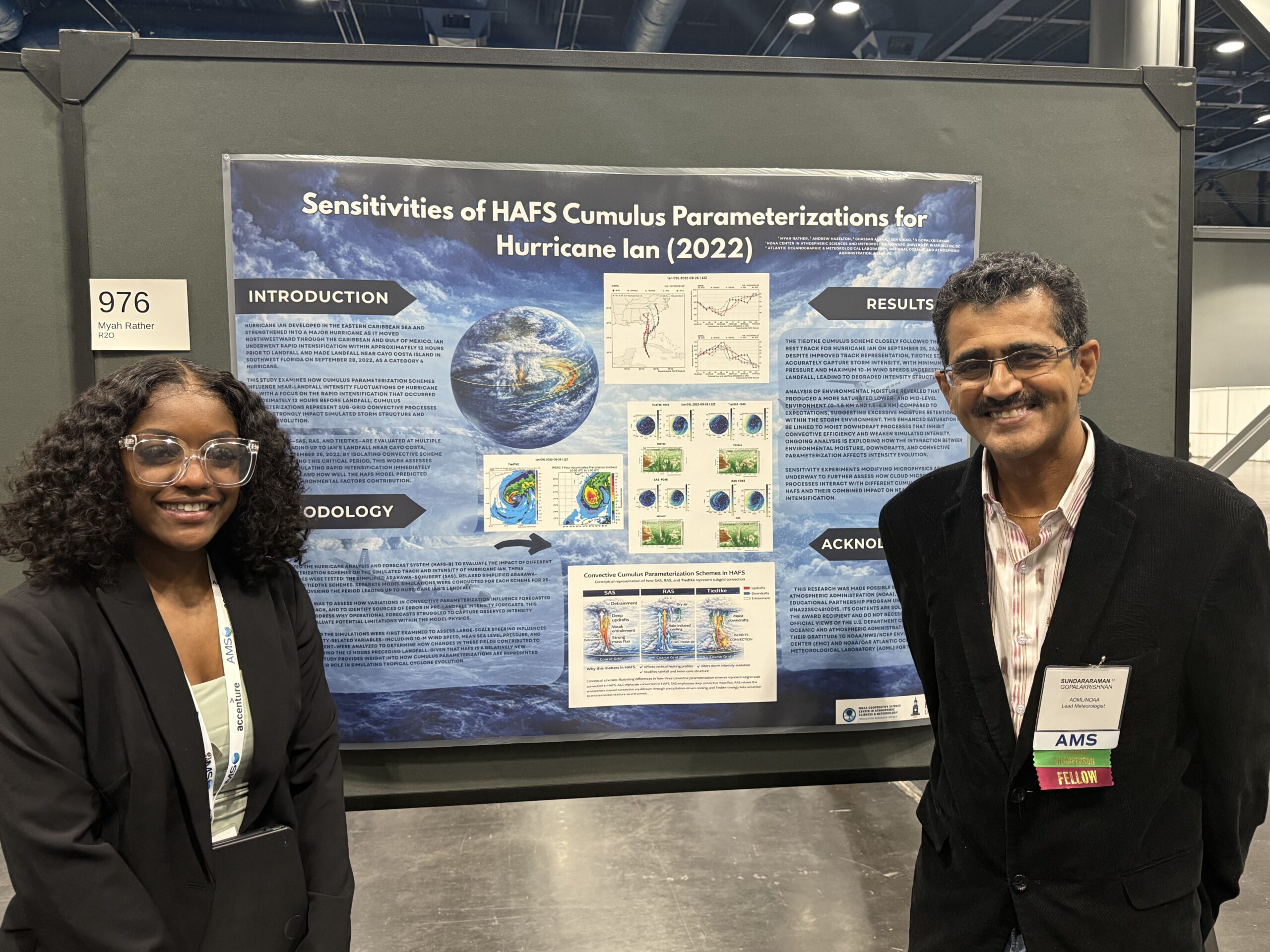
Rather (left) presenting at the 2026 AMS Annual Meeting.
“I love monumental events and moments and am glad to be apart and help out at the student fair to encourage more students to come join our NCAS-M community,” Rather said. “It was very helpful learning how to wear numerous hats at work from a host of HBCU & Friends to a graduate student balancing my research understanding in the hard sciences.”
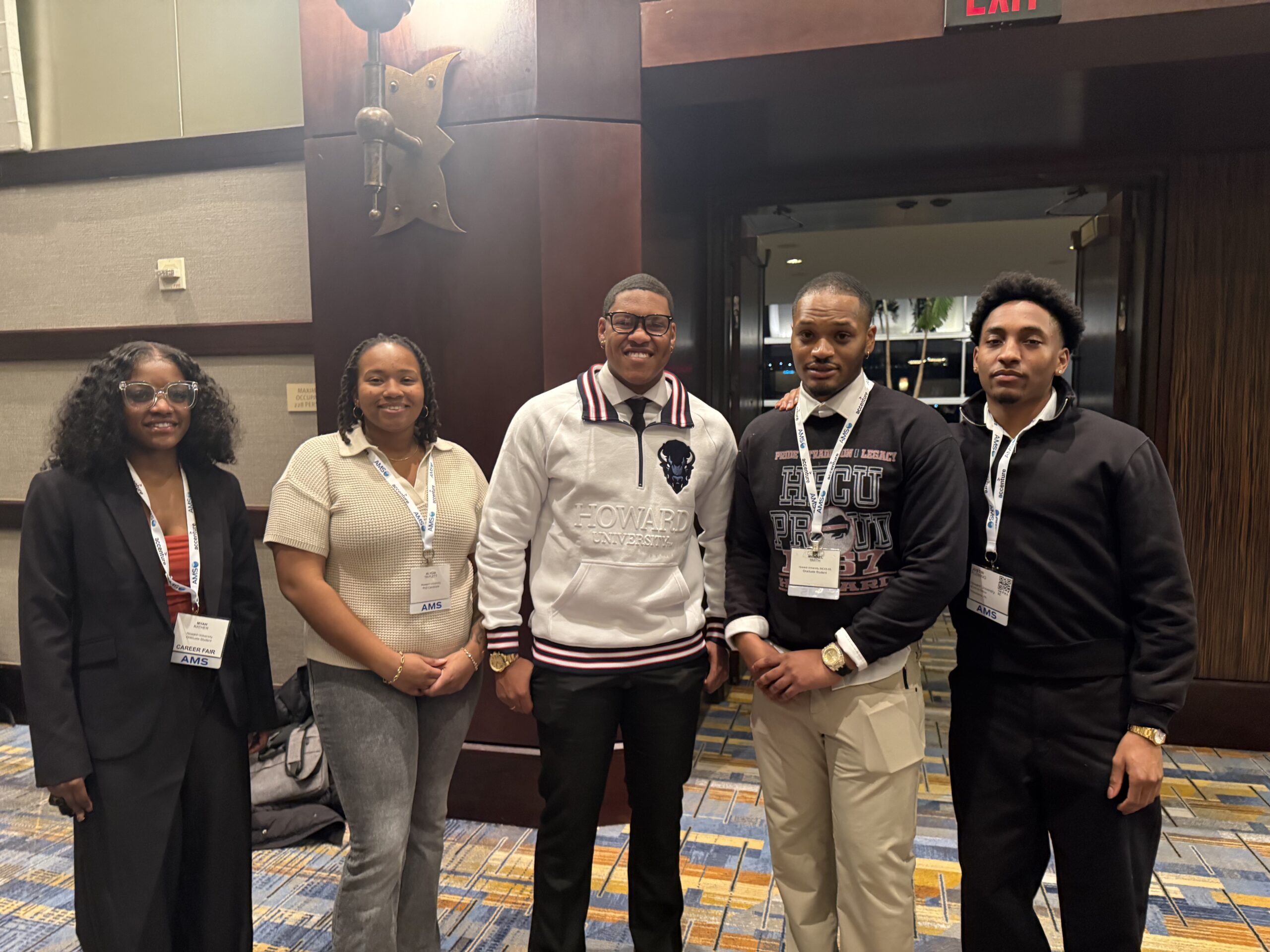
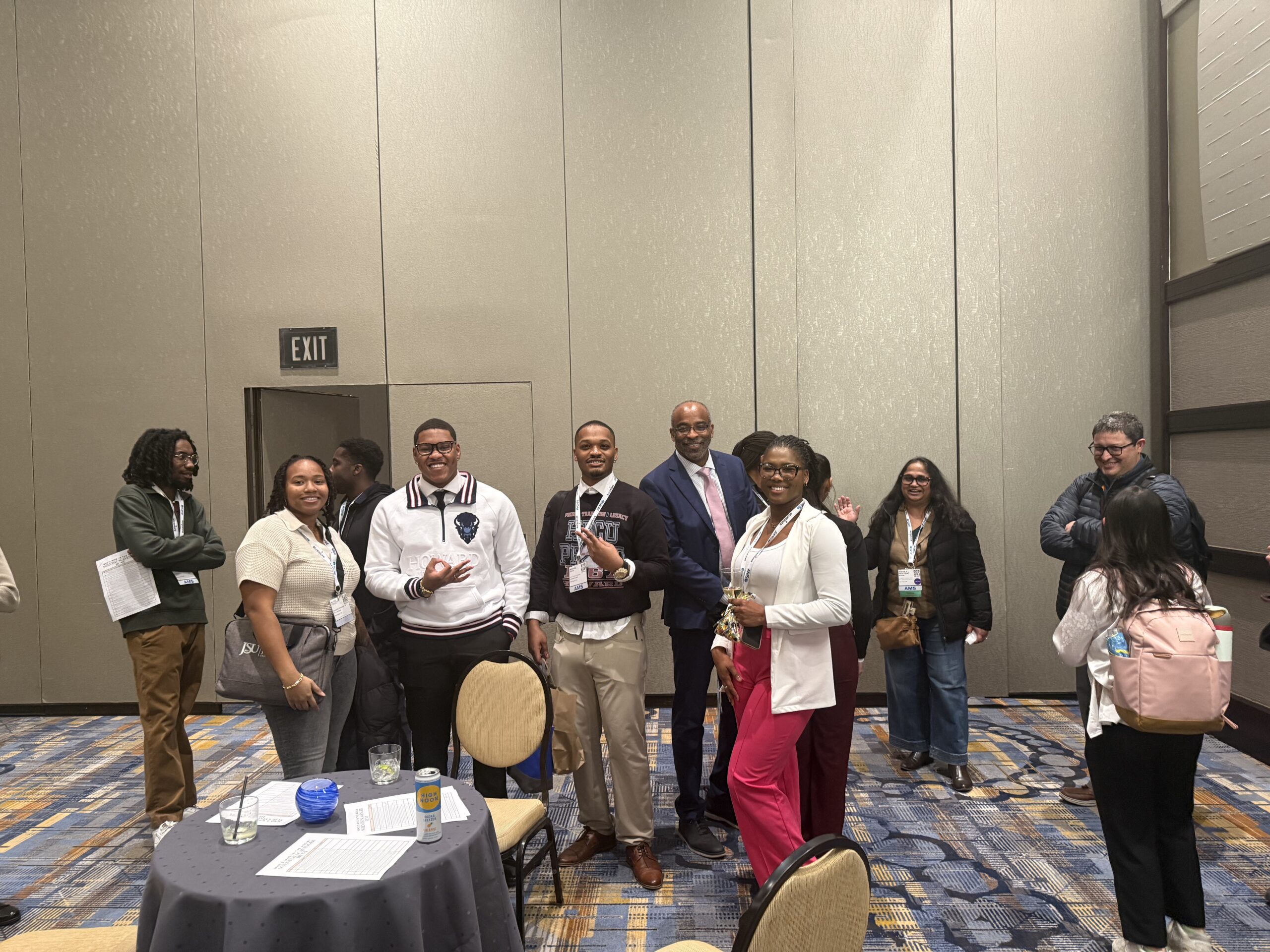
Rather with HBCU & Friends attendees.
MENTORSHIP AND PROFESSIONAL DEVELOPMENT
Faculty and research scientists within NCAS-M emphasized the importance of conference participation for professional development and community building.
“Frankly, my proudest moments!” said Belay Demoz, NCAS-M PI and Distinguished Professor at the University of Maryland, Baltimore County, when asked about seeing NCAS-M students present at AMS. Demoz highlighted several memorable moments, including watching a NCAS-M student lead the NOAA booth talk on the exhibition floor and attending the HBCU mixer. “Made me happy to see so many fellows that are very successful,” he added.
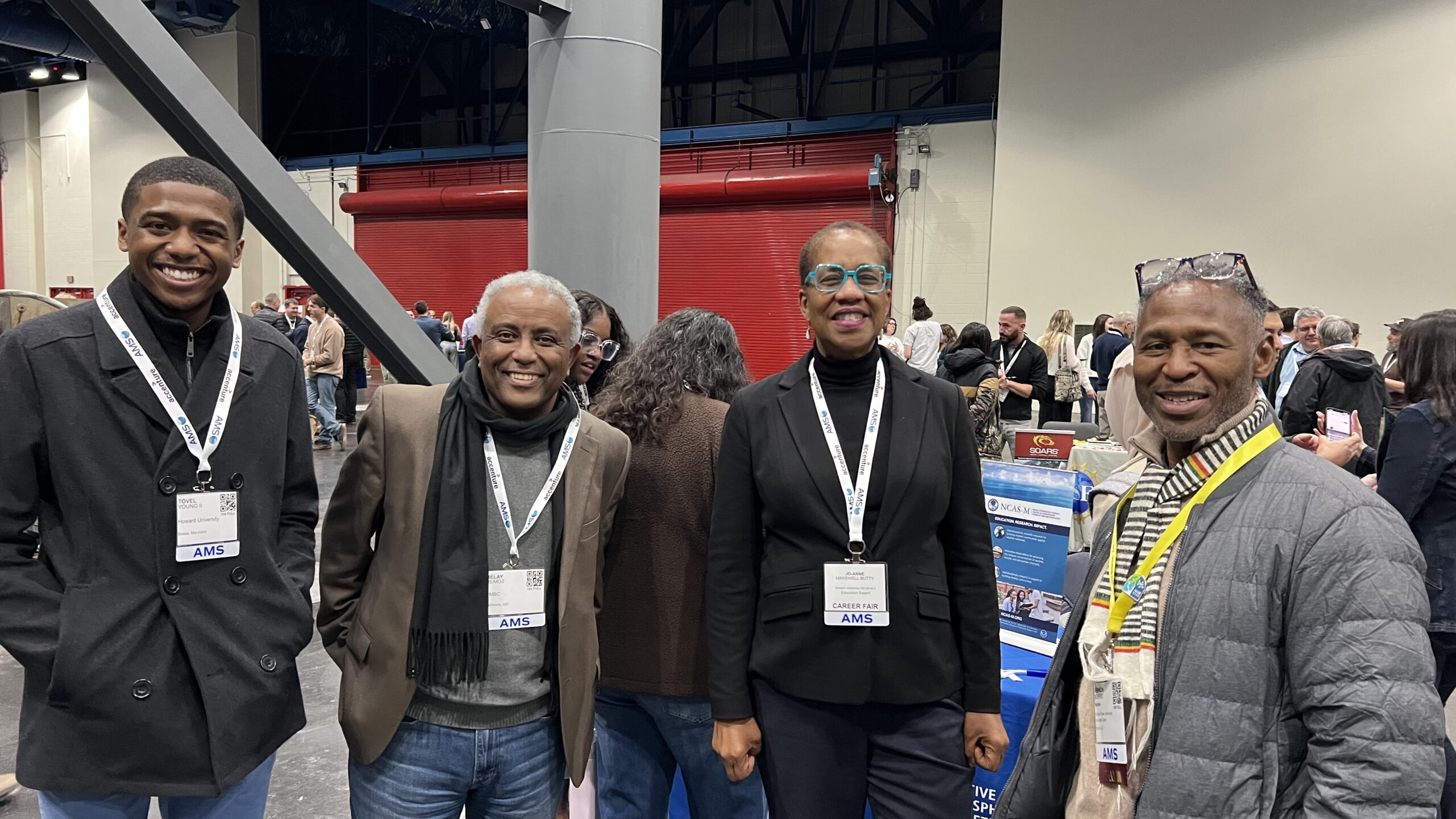
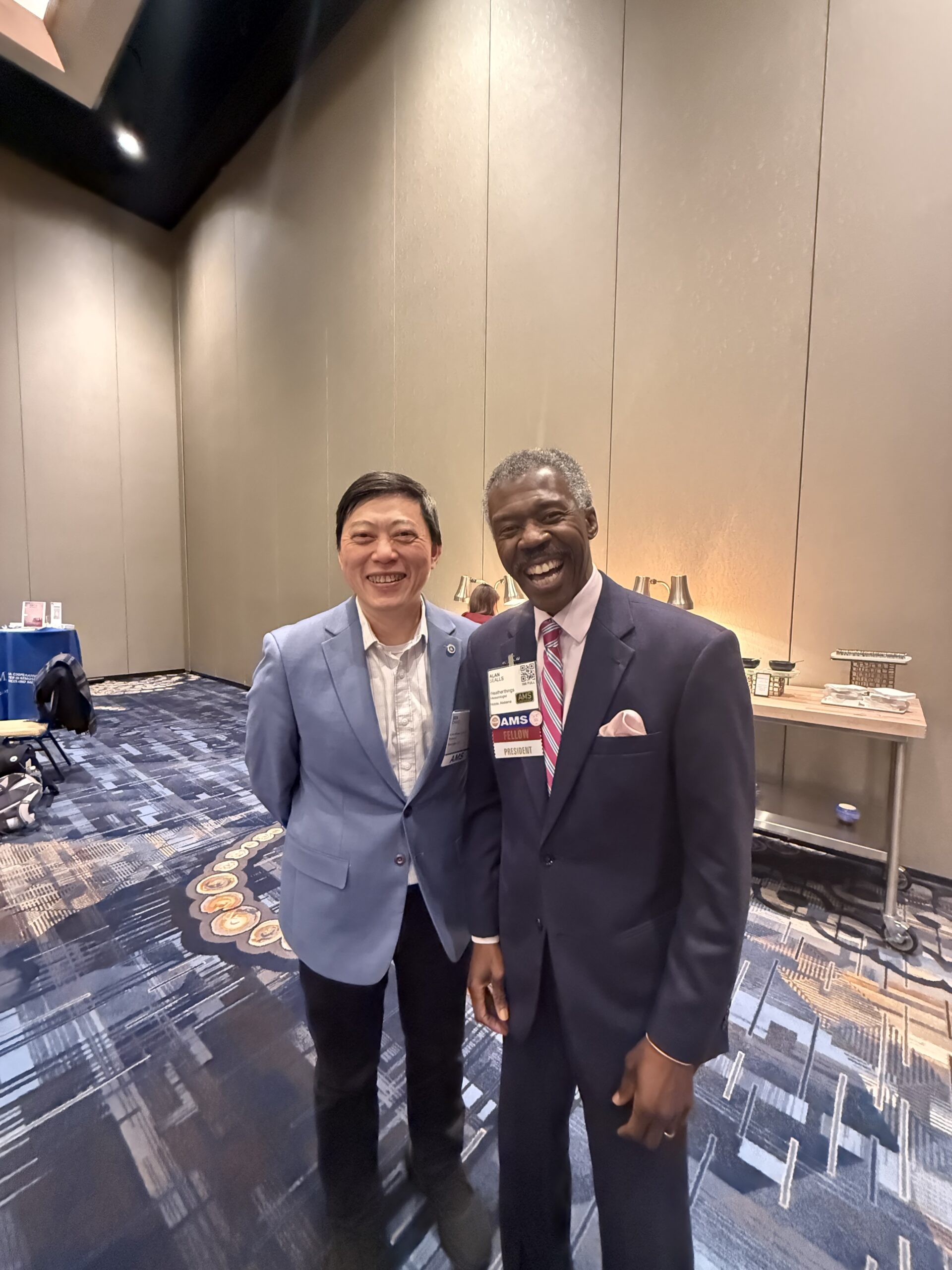
Demoz (second from the left) and NCAS-M community at the 2026 AMS Annual Meeting.
Nakul Karle, Assistant Research Scientist at Howard University, emphasized the value of in-person connections. “I was delighted to see collaborators in person and spend quality time with them. Much better than seeing a 2-D version of them on the screen,” he said. “I hope NCAS-M students gain exposure to the broader community and the most up-to-date research in their respective fields.”
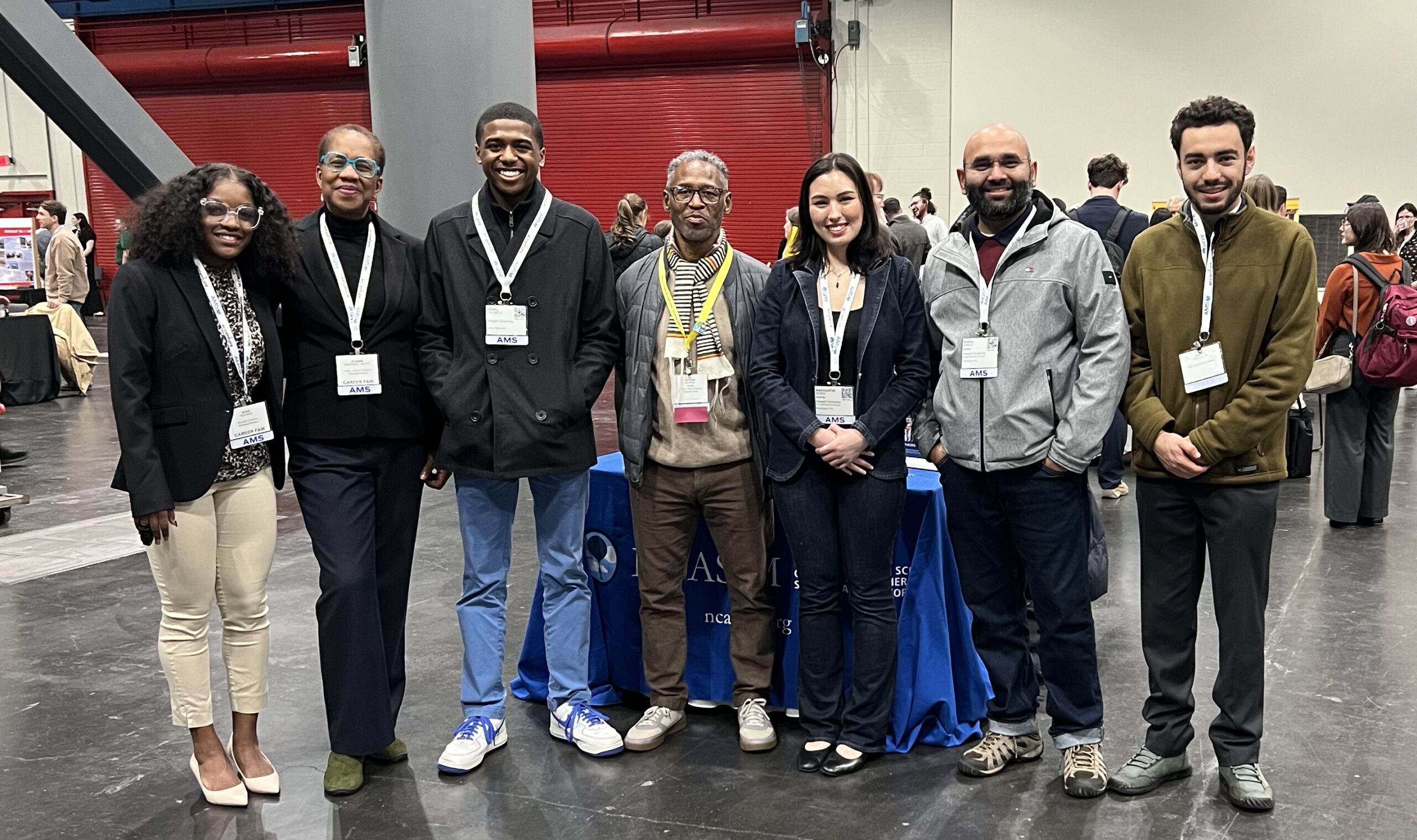
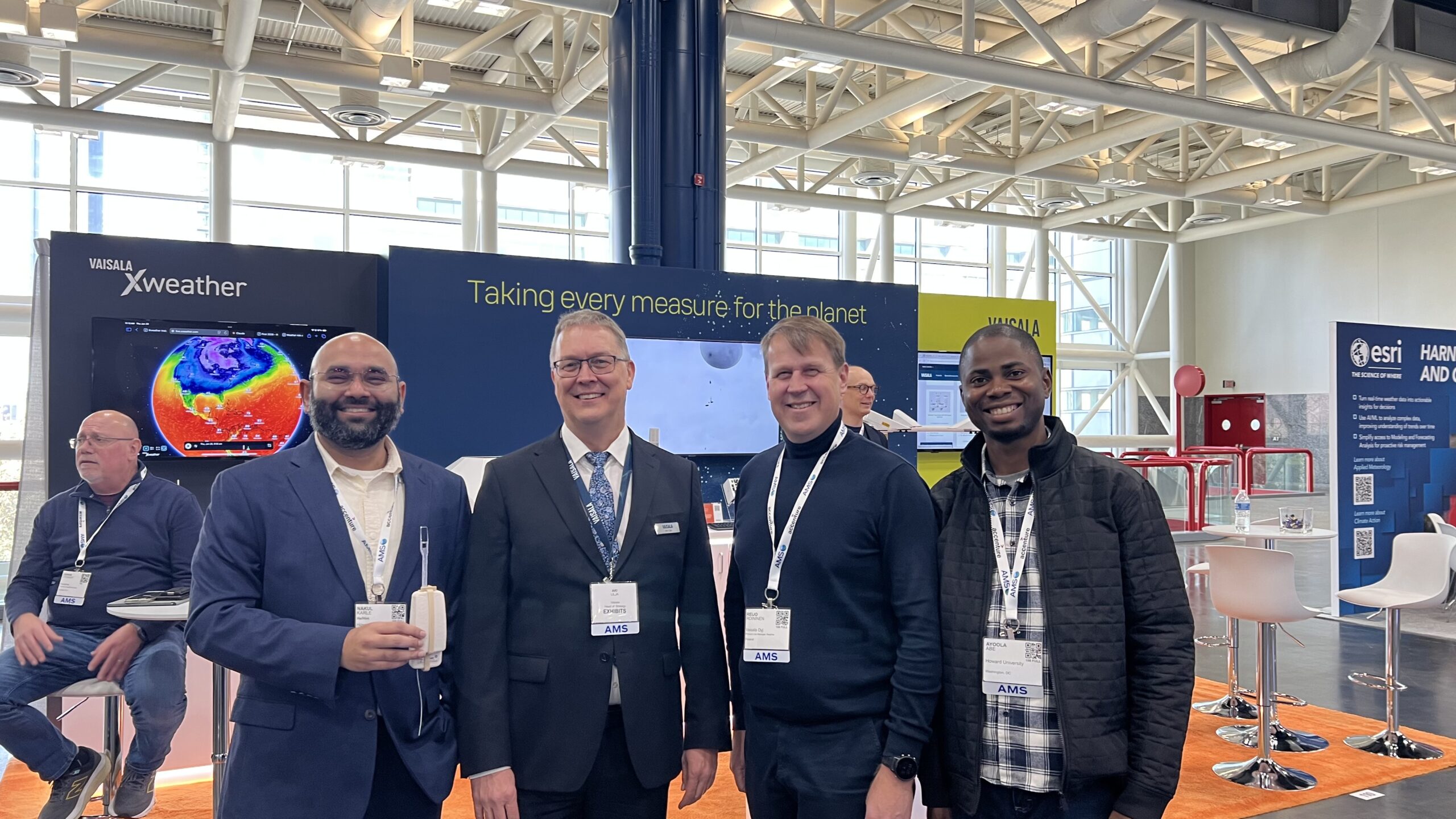
Karle (second from the right) and NCAS-M scholars at the 2026 AMS Annual Meeting.
Chimborazo echoed the importance of the networking opportunities: “I hope students gain three main things: confidence in presenting their work and answering questions, exposure to the broader research landscape and emerging methods, and professional connections that can lead to mentorship, internships, graduate opportunities, and future collaborations.”
RESILIENCE AND REPRESENTATION
For many NCAS-M scholars, the 2026 AMS Annual Meeting represented more than just an opportunity to present research—it was a testament to the strength and resilience of the atmospheric science community.
“It really drove home how resilient the AMS community is,” said Hernández. “Seeing that level of academic and intellectual support, especially when we’re tackling such tough scientific challenges, was a huge reminder of why this society matters so much.”
The strong NCAS-M presence at AMS 2026 also carried personal significance for participants. “I’m honestly honored to represent NCAS-M as a research scientist for the first time!” Hernández said. “Beyond the academic experience, these spaces are key for building community with our students and fellows.”
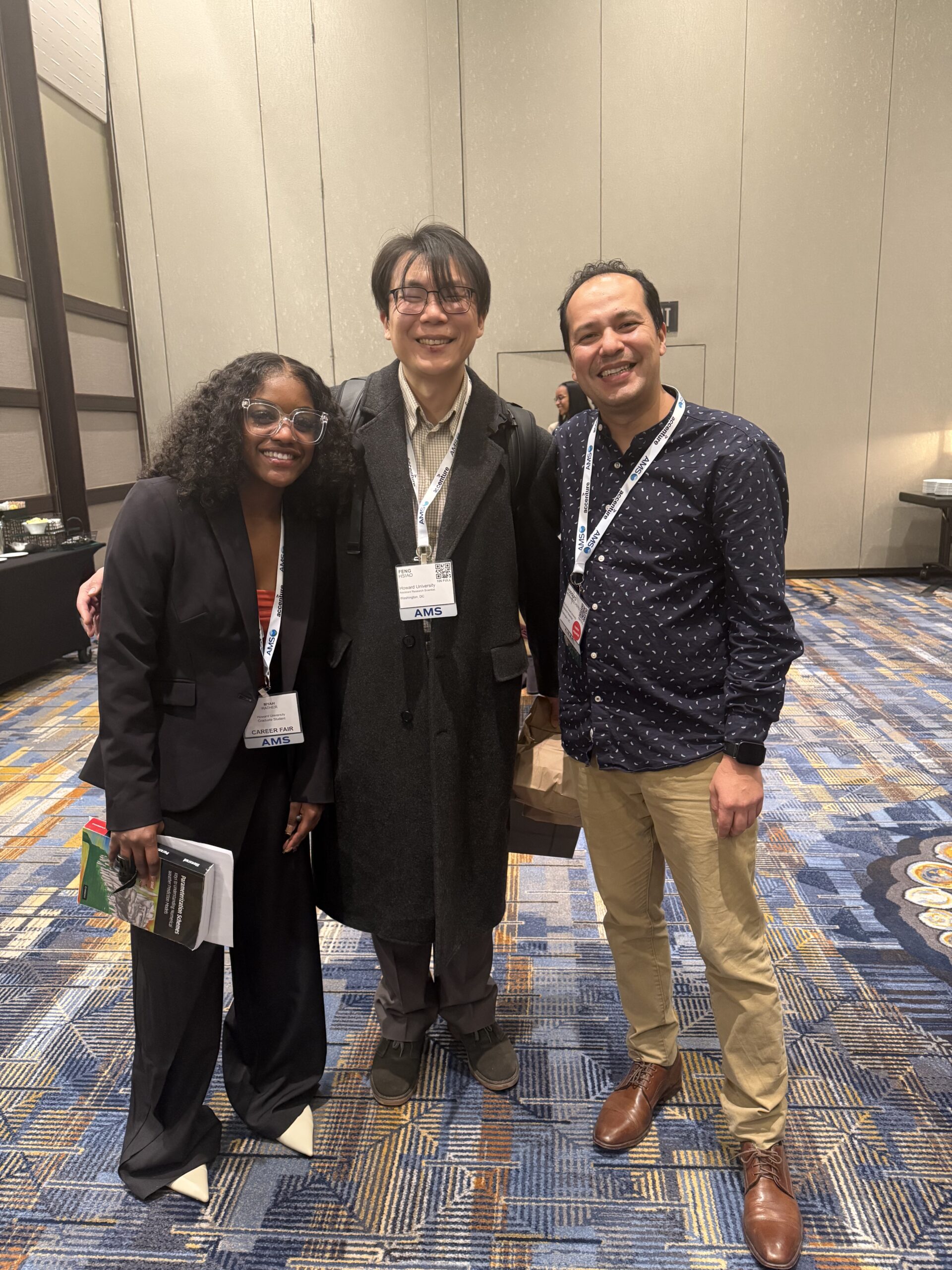
Hernández (far right) and NCAS-M scholars at the 2026 AMS Annual Meeting.
Rather reflected on the collective achievement: “It means a lot to be a part of a remarkable NCAS-M accomplishment.”
LOOKING AHEAD
The continued growth of NCAS-M representation at AMS reflects the program’s success in preparing scholars for professional engagement and scientific leadership. Through collaborative research environments, mentorship, and professional development opportunities, NCAS-M has created a supportive ecosystem that enables scholars to contribute meaningfully to atmospheric science while building lasting professional networks.
As Benneh noted, the conference experience has lasting impact: “It inspires me to do more to be part of this history and the success of this evolving field.”
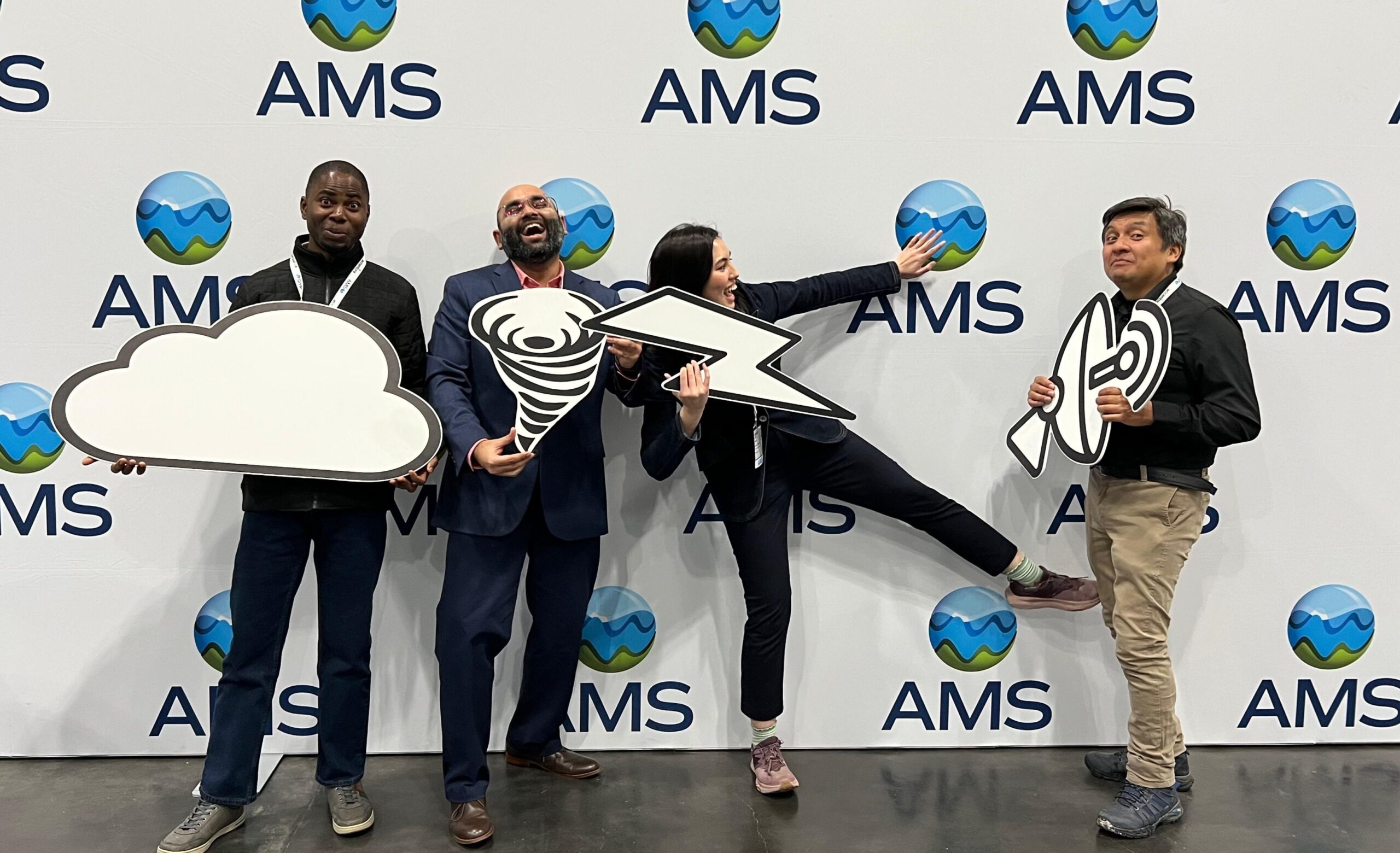
PHOTO DUMP
|
|
|
|
|
|
|
|
|