Dr. Nakul Karle’s MATLAB activity earns a spot in a national collection of exemplary teaching materials
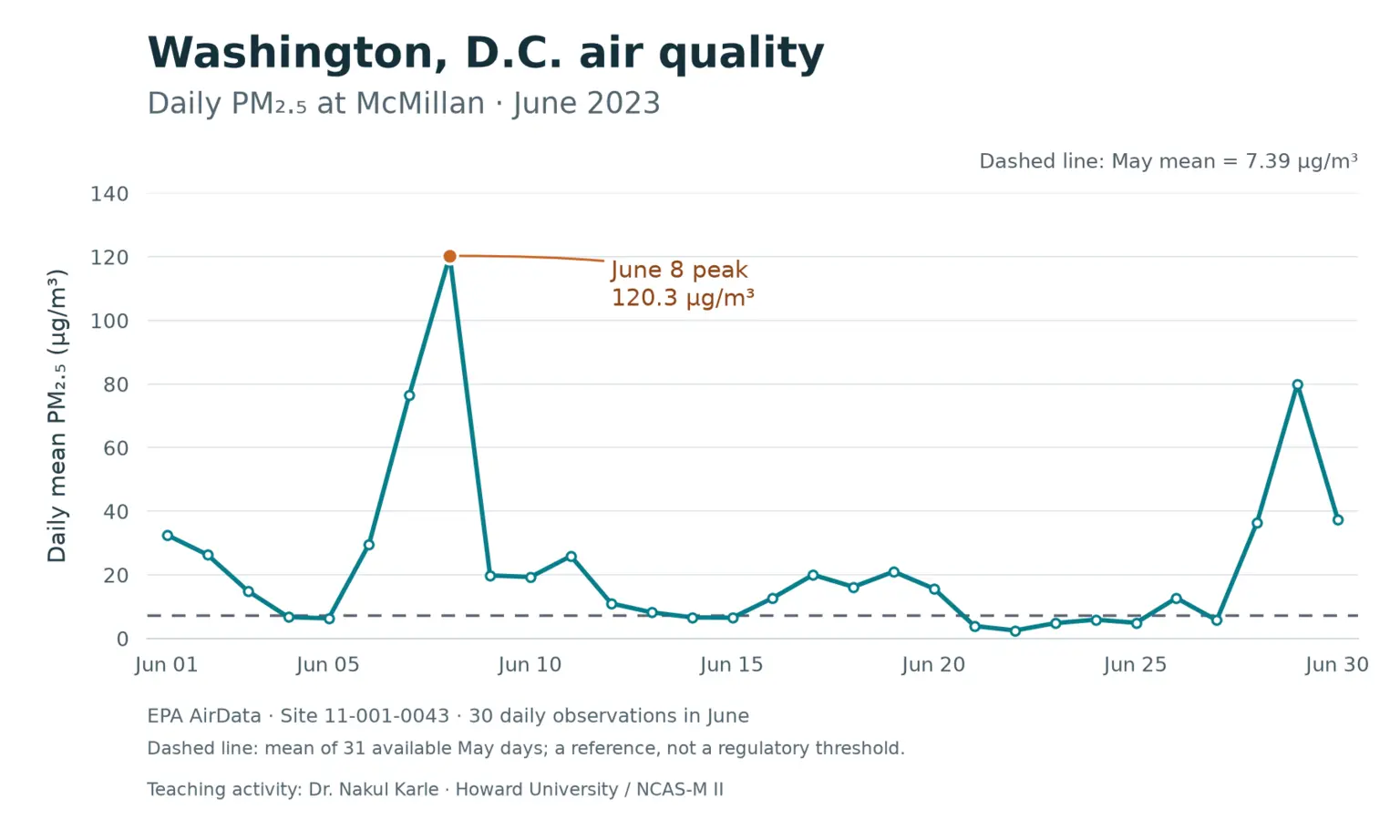
WASHINGTON, D.C. — In June 2023, wildfire smoke drifted hundreds of miles into the Washington, D.C. region, turning skies hazy and sending air quality to unhealthy levels. Now, that event is helping students learn to think like scientists.
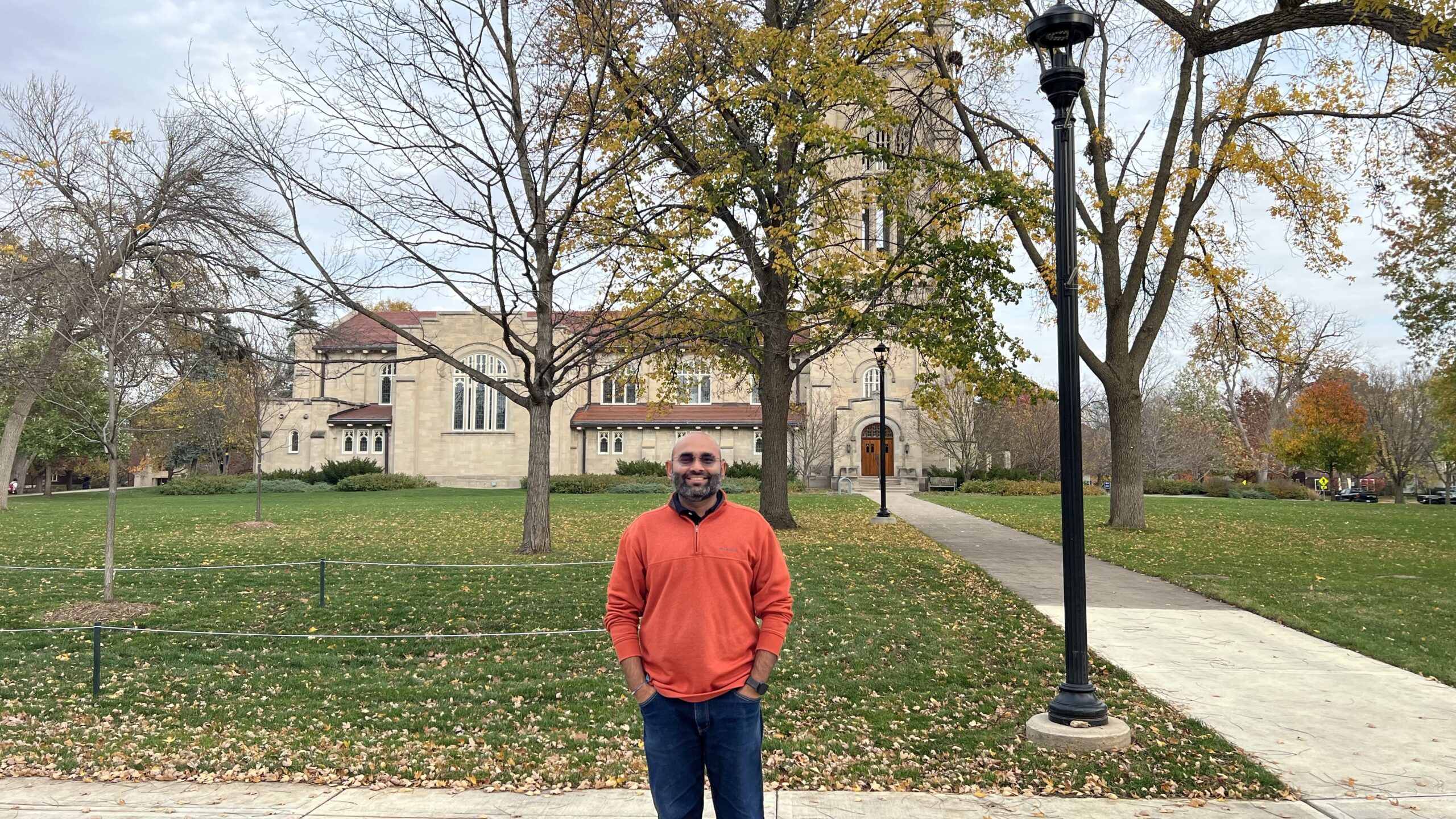
Dr. Nakul Karle, NCAS-M Research Scientist at Howard University, has designed a classroom activity that lets undergraduates dig into the real air quality data recorded during that episode, including measurements from a monitoring station right next to Howard’s campus. His activity, “Investigating Wildfire Smoke and Air Quality in the DMV Using MATLAB and EPA Dataset,” was selected for the Exemplary Teaching Collection of the Teaching Computation in the Sciences Using MATLAB and Generative AI Workshop, held October 25–27, 2026, at Carleton College in Minnesota.
“I believe students learn and understand scientific concepts better when they can explore real-world data and see the results unfold in front of them. Through this activity, I hope to make atmospheric science more engaging, interactive, and accessible.”
— Dr. Nakul Karle
From raw data to scientific detective work
Students don’t need any coding experience to start. Using MATLAB, they pull U.S. Environmental Protection Agency (EPA) measurements of fine particulate matter (PM2.5), plot how pollution changed over the year, and pinpoint the day smoke hit hardest. Then they compare those ground measurements with satellite images to build an evidence-based explanation of where the smoke came from.
Along the way, they also learn to work with AI responsibly. Students ask MATLAB Copilot to explain a piece of code, then test whether the AI got it right, a skill that matters well beyond the classroom.
A national stamp of approval
Only activities rated highly across five peer-review categories, including scientific accuracy and teaching effectiveness, earn a place in the Exemplary Collection. The workshop itself brought together educators from across the country who use computational tools in science teaching.
“It was a wonderful learning experience to interact with educators who actively integrate programming and computational tools into their classrooms,” Dr. Karle said. “The workshop helped me appreciate how much we can accomplish through data analysis and visualization using tools such as MATLAB Live Scripts.”
The activity draws on Dr. Karle’s research in air quality, the atmospheric boundary layer, and remote sensing, and is freely available to educators everywhere.
Explore the activity:
Investigating Wildfire Smoke and Air Quality in the DMV Using MATLAB and EPA Dataset